Anyone who moves hundreds of tons of secondary raw materials every day needs more than just a good eye. Blasius Schuster GmbH & Co. KG from Frankfurt am Main understood early on that transparency in the material flow is not a nice-to-have – but the foundation for economically and ecologically sensible recycling. Today, two Truck Imagers and one Train Imager are operating on the premises, providing what previously had to be painstakingly recorded manually: objective, comprehensive, and usable data on every delivery. Four more systems – including the new Self-Service Truck Imager – are already in planning. A partnership that has been convincing from hour one.
The customer: Blasius Schuster GmbH & Co. KG, Frankfurt am Main
Blasius Schuster is one of the established companies in the field of mineral construction material recycling in the Rhine-Main area. The company handles millions of tons of secondary raw materials annually – by truck, rail, or ship – across several locations with various entry points and in a wide range of material types.
But Blasius Schuster is more than just a recycling company. Under the leadership of managing director and partner Daniel Imhäuser, the company has undergone a remarkable transformation in recent years: it has become the initiator and driver of the Circle - the place for circular construction in Offenbach am Main - a unique nationwide network and innovation hub for the circular economy, where today over 90 companies from construction, waste management, engineering firms, and environmental law come together to systematically transition the construction industry into the circular economy.
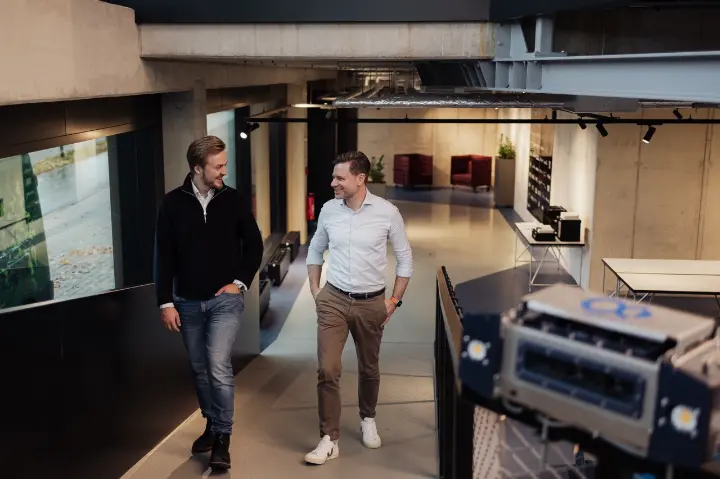
It is precisely this mindset – viewing the circular economy not as an obligation, but as a business opportunity – that has shaped the collaboration with Optocycle from the very beginning.
The Context: When Visions Meet Technology
The Circle Hub is much more than an office complex in the Offenbach harbor. It is a place where companies looking to shape the future of the construction and recycling industries exchange ideas and forge new partnerships. For Optocycle, the Circle Hub was exactly that: a gateway and network through which trust was built before the first camera was installed.

“Our vision with the Circle was to create a place where professionals from different areas of the circular economy can meet, exchange ideas, and collaboratively develop new solutions. Technologies like those from Optocycle are exactly what we are talking about here – they make the circular economy measurable and thus truly actionable.”
Daniel Imhäuser
Managing Director & Partner, Blasius Schuster GmbH & Co. KG, Initiator Circle Hub Urban Mining
For Max-Frederick Gerken, Co-Founder and CEO of Optocycle, Blasius Schuster has been a special customer from the very beginning.:

“Blasius Schuster is not just a reference customer – they are a partner who understood from the very beginning what transparency in the material flow is really about. Daniel Imhäuser and Ralph Lang bring exactly the combination we desire from our partners: entrepreneurial vision and the courage to consistently digitalize processes. This partnership has shaped us as a company.”
Max-Frederick Gerken
Co-Founder & CEO, Optocycle GmbH
The challenge: Incoming materials without blind spots
A recycling operation depends on the quality of its assessments. What material arrives? In what composition? Does the load match what is on the delivery note – or does it deviate? And if damage occurs to a wagon: When exactly did it happen, and who is responsible?
Without systematic recording, the questions remain that can only be answered incompletely. Manual checks are time-consuming, prone to errors, and hardly feasible on a large scale during ongoing operations. In a company like Blasius Schuster, which handles both truck deliveries and ship and rail freight transport, this challenge multiplies: many stations, many wagons, a lot of movement.
For managing director Ralph Lang, one of the key arguments was the issue of operational integration:

„Wir nutzen Optocycle, weil wir damit die Materialzusammensetzung der angelieferten Stoffe präzise analysieren können. So können wir für jedes Material gezielt die passende Aufbereitungslösung auf unserem Hof auswählen und optimale Ergebnisse erzielen. Besonders überzeugt hat mich letztlich die unkomplizierte Integration in unseren laufenden Betrieb."
Ralph Lang
Geschäftsführer, Blasius Schuster GmbH & Co. KG
The solution: Three truck imagers and one train imager – and three more systems in planning
The answer to this challenge is Optocycle. And Blasius Schuster has implemented it consistently and comprehensively: Three Truck Imagers and one Train Imager are currently in use at various stations on the premises – making Blasius Schuster one of the most comprehensively equipped businesses with Optocycle technology in Germany. And this is just the beginning: Three more systems are already in planning.
The systems take on two different tasks:
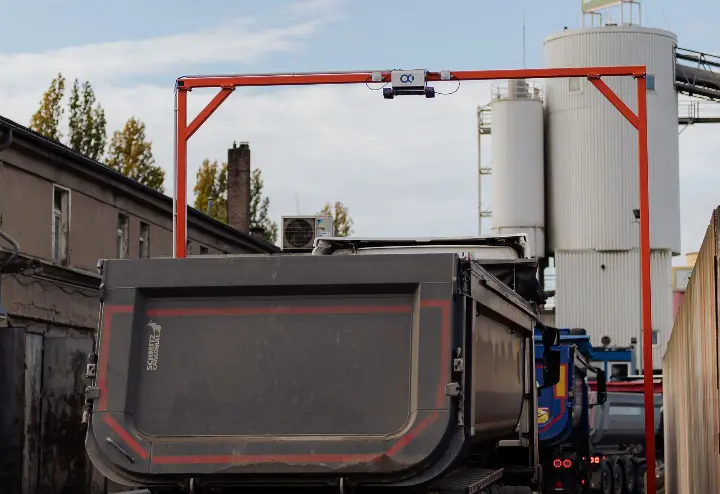
1. Optical Sensors at the Truck Scale
At the entrance, right at the truck scale, Optocycle cameras automatically capture the contents of each incoming vehicle. The AI-powered image analysis determines the material composition in real-time – without manual assessment, without delay, directly synchronized with the weighing process.
The result: fewer discussions about material quality, clearer foundations for billing, and a seamless, objective proof for every input. What was once decided by estimation is now documented and reproducible.
2. Truck & Train Imager im Schienengüterverkehr
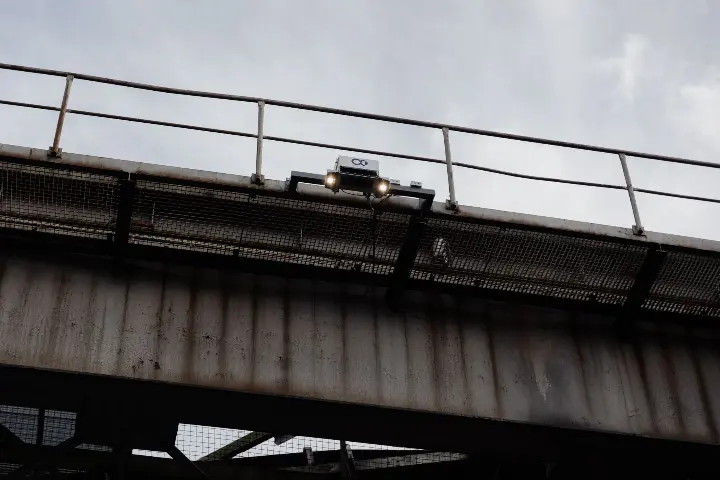
Where raw materials are transported on-site not by truck, but by freight train, a specially adapted Train Imager is used – a product development by Optocycle, designed specifically for this application and finding its most demanding practical use at Blasius Schuster.
The system automatically documents both the contents of the wagons and their condition – from both sides, completely and without manual intervention. Damage, contamination, or material deviations are detected early and clearly assigned to a delivery.
The result: higher transparency, reliable quality control, and a significantly simplified tracking along the entire logistics chain. Liability issues can be clarified before they become a problem.
What four systems really mean
Six systems at different stations are not an end in themselves – they are the consistent expression of a realization: Transparency in the material flow does not arise at a single point, but continuously. From the initial input to the processing.
For Blasius Schuster, this means concretely:
- Efficiency gain in material intake: Each delivery is automatically classified. The correct processing line is chosen more quickly and safely.
- Comprehensive documentation: Whether truck or wagon – every delivery is documented and traceable with images.
- Quality control without additional effort: Deviations from the target are automatically detected before the material goes into processing.
- Strengthening in complaint situations: Those who can prove what arrived when and in what condition have a factual basis for discussions with suppliers and freight forwarders.
- Scalability: Four systems today, three more in planning – including the Self-Service Truck Imager, which makes the capture process even more independent and efficient.
Conclusion: A partnership that was equal from the very beginning
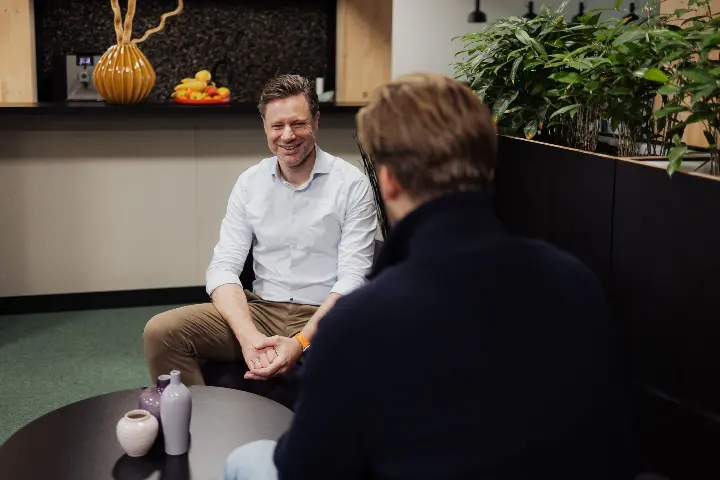
The collaboration between Optocycle and Blasius Schuster is not a classic supplier-customer relationship. It is a partnership that has grown through a shared understanding of what the circular economy truly needs: namely data, transparency, and the courage to embrace digitalization.
That Blasius Schuster is now one of the most comprehensively equipped Optocycle customers with numerous systems is no coincidence. It is the result of an entrepreneurial attitude that Ralph Lang and Daniel Imhäuser consistently advocate: Those who do not know what arrives on the farm cannot decide how to create the best value.
With Optocycle, you know it now.
Would you like to learn how Optocycle can make your operations more transparent and efficient? Schedule a non-binding conversation now using this link.